
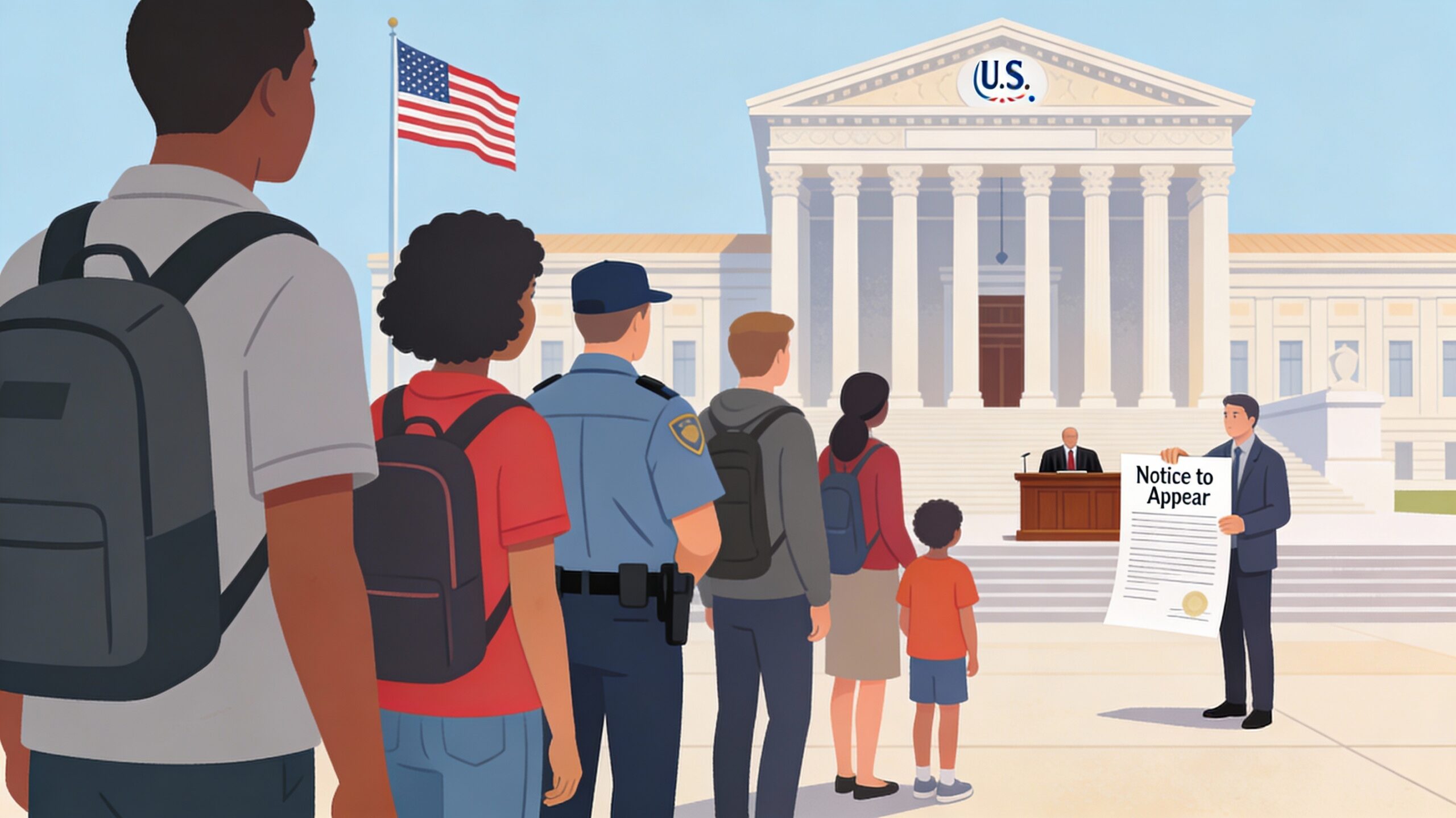
USA deportation laws explained in simple language is essential for immigrants, visitors, students, and even employers. USA deportation laws determine who can stay in the country and who must leave due to legal violations. This article explains the topic clearly for beginners, without legal jargon.
Deportation is a serious legal process that affects hundreds of thousands of people in the United States every year. Understanding how deportation laws work can help individuals protect their rights, avoid mistakes, and respond correctly if they face immigration issues. This guide breaks down the meaning, importance, process, benefits, risks, myths, rights, protections, and frequently asked questions related to deportation laws in the United States.
Meaning / Explanation of USA Deportation Laws
USA deportation laws refer to the legal rules and procedures used by the United States government to remove non-citizens from the country. Deportation is officially called “removal” under U.S. immigration law.
A person may face deportation if they violate immigration rules, commit certain crimes, overstay a visa, or enter the country illegally. These laws are enforced mainly by the Department of Homeland Security (DHS), Immigration and Customs Enforcement (ICE), and U.S. Citizenship and Immigration Services (USCIS), while immigration judges work under the Executive Office for Immigration Review (EOIR).
Deportation laws apply to:
- Tourists and visitors
- Students and exchange visitors
- Temporary workers
- Permanent residents (green card holders)
- Undocumented immigrants
Being deported means the individual is forced to leave the United States and may be banned from returning for several years or permanently, depending on the case and the specific ground of removal.
Why USA Deportation Laws Matter
USA deportation laws matter because they directly affect immigration status, family unity, employment opportunities, and personal freedom.
For immigrants, understanding these laws can mean the difference between staying legally in the country and being removed. For employers, violations such as hiring unauthorized workers can lead to penalties and legal consequences. For students and visitors, even small mistakes like missing paperwork, violating status rules, or working without authorization can result in serious problems.
Deportation laws also play a role in national security, labor markets, and international relations. Governments use these laws to regulate who enters and stays in the country and to respond to issues such as crime, fraud, and national security threats.
Most importantly, these laws impact real lives. Families can be separated, careers disrupted, and years of effort lost due to misunderstandings or lack of information about immigration rules and rights.
How USA Deportation Laws Work (With Examples)
The deportation process usually follows a structured legal path. Below is a simplified step-by-step explanation, focusing on regular removal proceedings in immigration court.
Step 1: Identification
A person may be identified by immigration authorities through:
- Police records and criminal arrests
- Visa overstays tracked by immigration databases
- Worksite inspections and employer audits
- Border checks and airport inspections
- Immigration application reviews by USCIS
In some cases, people are also identified through traffic stops, immigration raids, or when they apply for new visas or benefits and past violations are discovered.
Step 2: Notice to Appear (NTA)
The individual receives a legal document called a Notice to Appear (Form I-862). This document explains why the government believes the person should be deported and starts formal removal proceedings once it is filed with the immigration court.
The NTA lists details such as the person’s name, country of origin, alleged immigration violations, and the section of the immigration law used against them. Failing to attend the hearing listed in the NTA can result in an automatic removal order in absentia.
Step 3: Immigration Court Hearing
The case is reviewed by an immigration judge in a special immigration court, not a criminal court. The individual has the right to present evidence, explain their situation, bring witnesses, and apply for relief from removal, but the government does not provide a free lawyer.
There is usually an initial “master calendar” hearing where basic issues are discussed, followed by an “individual” hearing where the judge hears detailed testimony and evidence.
Step 4: Decision
The judge may:
- Order deportation (removal) from the United States
- Allow the person to stay if the government cannot prove removability
- Grant relief such as asylum, withholding of removal, protection under the Convention Against Torture, or cancellation of removal
- Grant voluntary departure, allowing the person to leave without a formal removal order
Both the government and the individual usually have the right to appeal the judge’s decision to the Board of Immigration Appeals (BIA) within a limited time.
Example
A student enters the U.S. on an F-1 visa but stops attending classes. This violates visa conditions and means the student is “out of status.” If discovered, the student may be issued an NTA and face deportation unless corrective action is taken, such as reinstatement of status or changing to another lawful status if allowed.
Other Types of Removal Procedures
Apart from regular court proceedings, U.S. law also allows faster procedures such as expedited removal at the border or reinstatement of a prior removal order for people who illegally re-enter after being deported. These limited processes often involve fewer rights and no full hearing before an immigration judge, which is why legal advice is especially important in such situations.
Grounds for Deportation (Common Reasons)
USA deportation laws list many reasons, called “grounds of removability,” that can make a non-citizen deportable. Some of the most common include:
- Visa overstay or status violation: Staying beyond the permitted time or breaking visa conditions, such as working without authorization or not attending required classes.
- Illegal entry: Entering the U.S. without inspection, such as crossing the border between official checkpoints.
- Criminal convictions: Certain crimes, especially aggravated felonies, drug offenses, and crimes involving moral turpitude, can lead to removal.
- Fraud or misrepresentation: Using fake documents, lying on visa applications, or marriage fraud to get immigration benefits.
- Security and terrorism grounds: Involvement in terrorist activities or posing a serious threat to national security.
- Becoming a public charge under certain conditions: In limited situations, relying heavily on government support can create issues for some categories.
Not every crime or mistake leads to deportation, but some offenses carry very serious immigration consequences even if they seem minor under criminal law, so criminal and immigration lawyers often need to coordinate.
Benefits of USA Deportation Laws
While deportation laws are often viewed negatively, they do serve certain purposes within the legal system.
- Legal order: Ensures immigration rules are followed and provides a framework for handling violations.
- National security: Allows removal of individuals involved in serious crimes, terrorism, or threats to public safety.
- Fairness: Encourages lawful entry and compliance by treating similar cases under the same legal standards.
- Labor regulation: Helps prevent exploitation of undocumented workers and supports legal employment systems.
- Policy enforcement: Helps maintain immigration quotas and implement congressional policies on who may stay.
These laws aim to balance opportunity with responsibility by setting clear expectations for non-citizens, even though real-life applications can be complex and controversial.
Risks and Limitations of USA Deportation Laws
Despite their purpose, deportation laws have significant risks and limitations.
- Family separation and long-term damage to children and spouses.
- Emotional and psychological stress due to uncertainty and fear.
- Limited access to legal representation, especially for low-income immigrants.
- Language barriers that make it hard to understand court notices and rights.
- Long detention periods in immigration custody while cases are pending.
Many immigrants are unaware of their rights or cannot afford legal help, which increases the chance of mistakes and unfair outcomes. Additionally, immigration courts often face large backlogs, delaying justice for years and keeping families in a stressful situation.
Another limitation is that deportation laws may not always consider humanitarian factors such as illness, family dependency, long-term community ties, or danger in the home country unless specific forms of relief are requested and approved.
Rights and Protections in Deportation Cases
Even though immigration law is civil, not criminal, people in removal proceedings still have important rights and protections. Understanding these rights can greatly improve someone’s chance of a fair outcome.
- Right to a hearing: In most cases, non-citizens have the right to a hearing before an immigration judge instead of immediate deportation.
- Right to an attorney (at own expense): Individuals may hire a lawyer, although the government does not pay for one except in rare situations.
- Right to an interpreter: Courts generally provide interpretation if the person does not speak English well.
- Right to present evidence and witnesses: People can submit documents, testimony, and expert reports to support their case or relief application.
- Right to appeal: In many cases, decisions can be appealed to the Board of Immigration Appeals and sometimes further to federal courts.
Some people in removal proceedings may also request release from detention on bond if they are not subject to mandatory detention for certain crimes, which allows them to stay out of custody while the case continues.
Forms of Relief From Deportation
Relief from removal refers to legal options that allow a person to stay in the U.S. or leave without a removal order even when the government proves they are deportable. Common types of relief include:
- Asylum and related protections: For people who fear persecution in their home country based on race, religion, nationality, political opinion, or membership in a particular social group.
- Cancellation of removal: A discretionary remedy that, if granted, allows certain non-citizens or permanent residents to keep or obtain lawful permanent residence despite being removable.
- Adjustment of status: Allows an eligible person to become a lawful permanent resident (green card holder) during proceedings, often based on family or employment.
- Temporary Protected Status (TPS) or deferred action: Special programs that temporarily protect certain individuals from removal, for example due to war, disaster, or specific policy programs.
- Voluntary departure: Lets a person leave the U.S. on their own within a set time, avoiding a formal removal order if they follow the rules.
Each form of relief has strict eligibility rules, deadlines, and paperwork, so getting timely legal advice is often crucial.
Common Mistakes and Myths About USA Deportation Laws
Myth 1: Only undocumented immigrants can be deported
False. Even green card holders and visa holders can face deportation under certain conditions such as crimes, fraud, or status violations.
Myth 2: Minor crimes do not matter
Some offenses that seem minor under state law can still trigger deportation proceedings if they fall into specific immigration categories like crimes involving moral turpitude or controlled substance violations.
Myth 3: Deportation happens immediately
Most cases involve court hearings and legal procedures, and many take months or years to finish because of court backlogs and appeals.
Common Mistakes
- Ignoring legal notices or missing court dates, which can result in automatic removal orders.
- Overstaying visas or working without authorization, believing it is harmless if not caught.
- Providing false information or using fake documents to get immigration benefits.
- Signing papers without understanding them, especially at the border or in detention.
- Not seeking legal advice early, waiting until a final hearing or after a denial.
How to Reduce the Risk of Deportation
Taking simple preventive steps can significantly reduce the risk of facing removal proceedings. These measures are especially important for students, workers, and family-based immigrants.
- Always keep immigration documents, passports, and I-94 records safe and up to date.
- Know the exact conditions of your visa or status and follow them carefully, including work limits and study requirements.
- Renew or extend visas, work permits, and green cards well before they expire to avoid gaps in status.
- Avoid criminal activity and understand that even minor charges can have serious immigration effects; get advice from an immigration-aware criminal lawyer if arrested.
- Update addresses with immigration agencies so that important notices and hearing dates are not missed.
- Consult a qualified immigration attorney or accredited representative before filing complex applications or if you receive any notice from DHS or the court.
Trusted External Resources & Backlinks
For deeper understanding and official guidance on U.S. deportation and immigration laws, refer to the following authoritative resources:
- U.S. Citizenship and Immigration Services (USCIS) – Immigration Laws & Policy
- Immigration and Customs Enforcement (ICE) – Deportation & Removal Process
- Executive Office for Immigration Review (EOIR) – Immigration Courts
- Board of Immigration Appeals (BIA) – Appeals in Deportation Cases
- U.S. Immigration and Nationality Act (INA) – Federal Immigration Law
- USCIS – Asylum & Humanitarian Protection Programs
- ICE – Voluntary Departure & Deportation Information
FAQ Section – USA Deportation Laws Explained
1. Can a green card holder be deported?
Yes. Serious crimes, fraud, security issues, or certain immigration violations can lead to deportation for lawful permanent residents.
2. How long does deportation take?
It can take months or even years depending on court backlogs, appeals, and the complexity of the case.
3. Can deportation be stopped?
Yes. Legal relief such as asylum, cancellation of removal, adjustment of status, or other protections may apply if a person qualifies and applies in time.
4. What happens after deportation?
The individual is removed to another country, usually their country of nationality, and may face re-entry bans ranging from a few years to lifetime bans depending on the violation.
5. Is deportation permanent?
Not always. Some people can legally return after a waiting period or with special permission like a waiver, though this is often difficult and depends on the reason for removal.
6. Do immigrants have rights in deportation cases?
Yes. They have the right to a hearing (in most cases), to present evidence, and to be represented by a lawyer at their own cost, among other protections.
7. Can overstaying a visa cause deportation?
Yes. Visa overstays and status violations are common grounds for starting removal proceedings, especially if discovered through applications, arrests, or border checks.
8. What is voluntary departure?
It allows a person to leave the U.S. without a formal deportation order if they meet certain requirements and depart within a set time, which can reduce future immigration penalties.
9. What is expedited removal?
Expedited removal is a faster process that allows certain non-citizens, mainly recent arrivals or people stopped at the border, to be removed without a full hearing before a judge.
10. Should I sign documents given by immigration officers?
Anyone has the right to ask questions, request an interpreter, and seek legal advice before signing, especially if the document involves giving up rights or accepting removal.
Conclusion
USA deportation laws are complex but extremely important for anyone living in or visiting the United States. Understanding these laws helps individuals avoid costly mistakes, protect their rights, and make informed decisions.
Whether you are a student, worker, visitor, or permanent resident, staying informed and compliant with immigration rules is essential. Early awareness and proper guidance from qualified professionals can often prevent serious consequences.
Education and preparation remain the strongest tools for navigating the U.S. immigration system safely and responsibly, but legal advice from a licensed immigration attorney is critical for individual cases.
Disclaimer: This article is for educational purposes only and does not constitute legal or financial advice. Always consult a qualified immigration attorney or accredited representative for personalized guidance.